
Journal · Mindset
When the Body
Says Stop.
Injury is usually measured in scans, surgery and weeks away from training. But sometimes the hardest part of coming back has nothing to do with the injury itself.
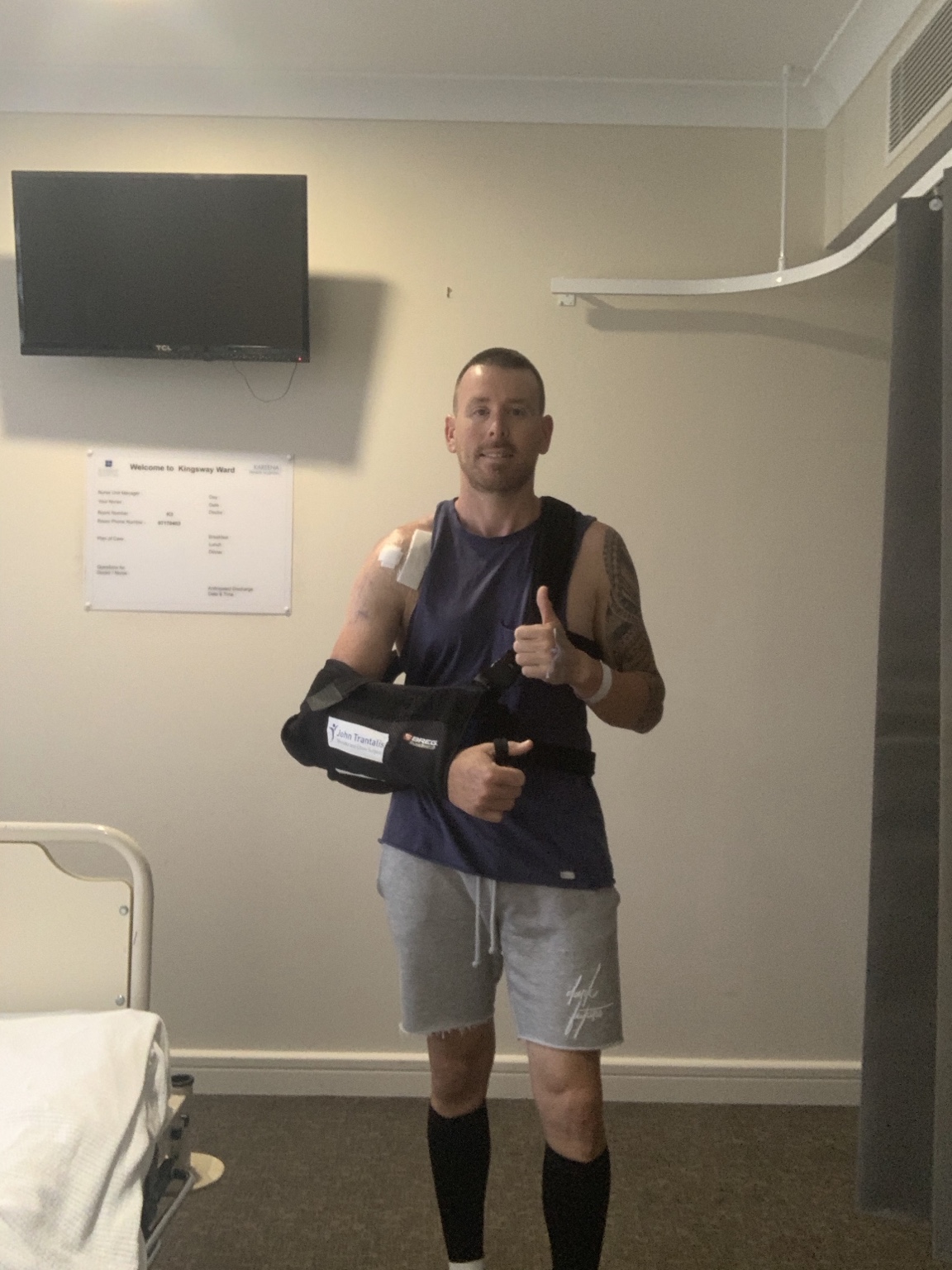
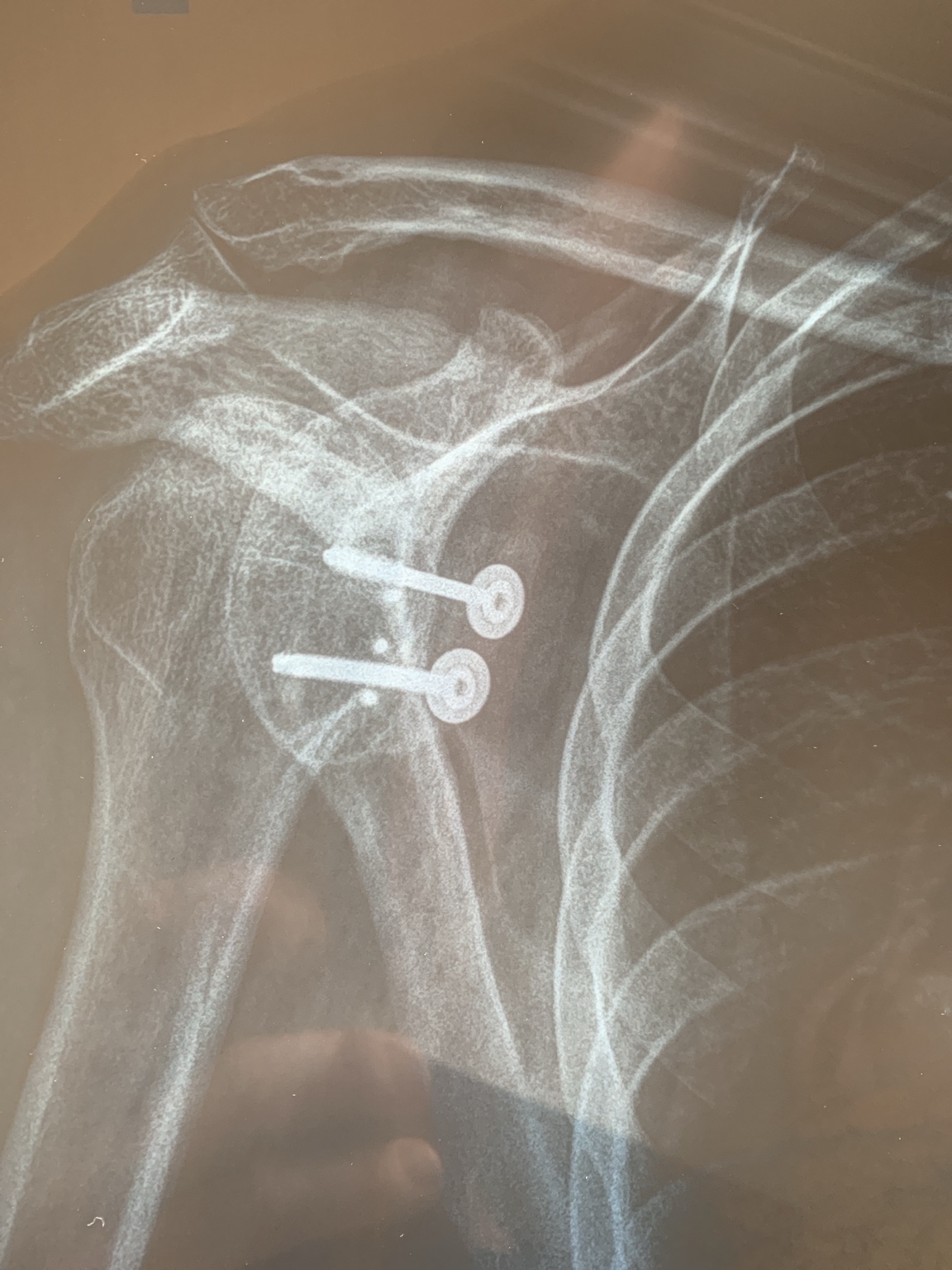
I've had my fair share of injuries over the years. Three shoulder operations. Thirteen operations on my head and eye following my cycling accident in 2002. Then there have been the less dramatic ones that come with a lifetime of sport: sprained ankles, strained hips, knee flare-ups and countless little niggles that seem to arrive just when training is going well. It is a difficult part of sport, but eventually most athletes experience it in one form or another.
When someone gets injured, we naturally focus on the physical damage. We want to know what happened, what the scan showed, whether surgery is required and how many weeks it will be before they can train again. We measure progress through movement, strength, pain and eventually the gradual return to training. That all makes sense. The body is injured, so we repair the body.
But after going through enough injuries myself, I've come to believe there is another part of rehabilitation we don't talk about nearly enough.
What happens to the mind when the body suddenly says stop?
For an athlete, training is rarely just exercise. Over time it becomes part of the rhythm of your life. You know what days you run, what days you ride, when you go to the gym and what event sits somewhere on the horizon. There is always another session, another small goal and another opportunity to improve.
Training can also become the place where we think. It is where we process difficult days, solve problems, clear our heads and create some space between ourselves and everything else going on in life. Sometimes you leave for a run with your head completely full and return with exactly the same problems, but somehow they feel easier to carry.
When injury suddenly takes that away, you can lose far more than fitness. You lose routine. You lose momentum. Sometimes you lose confidence. If sport has been a large part of your identity for long enough, you can even feel as though you have temporarily lost a part of yourself.
I know that feeling.
Following my accident in 2002, the physical injuries were obvious. There were surgeons, hospitals and operations. There were things everyone could see. The mental side was different. There wasn't a scan that could tell me when I would trust a bike again. There wasn't an operation that could repair confidence. There wasn't a neat rehabilitation timeline telling me how long it would take before I stopped thinking about what had happened.
Years later, my shoulder surgeries taught me similar lessons on a much smaller scale. You can be given a rehabilitation program and told exactly what movement to do, how many repetitions to complete and when you might be able to increase the load. Physically, there is often a pathway. Mentally, the pathway can be much less obvious.
You remember what you used to be able to do. You remember the distances, the weights, the speed and the fitness you had before the injury. Your mind wants to return immediately to that version of yourself, while your body is reminding you that today you are somewhere very different. That gap can be frustrating. And frustration is often where athletes make mistakes.
We rush.
We compare ourselves with who we were before the injury rather than where we are today. We turn an easy rehabilitation session into a test. We try to make up for lost time. We interpret rest as weakness rather than understanding that recovery itself is part of training. I've probably been guilty of most of those things at some point.
As I've grown older, the way I approach my own training has changed considerably because of those experiences. It has also influenced how I coach athletes through Col de Sud. A large part of good training, in my view, is not simply making someone fitter. It is trying to build a body that is capable of continuing to train. That means understanding why injuries happen in the first place.
Of course, some things are completely outside our control. My accident certainly wasn't something that another set of squats was going to prevent. You can crash your bike. You can roll an ankle on a trail. You can simply be unlucky. But there are also things we can influence. How quickly we increase training load. How strong we are. How well we recover. How much we sleep. Whether we are eating enough to support the work we are asking our body to do. Whether we address small weaknesses early or ignore them until they become larger problems.
This is one of the reasons strength training has become such an important part of the way I train and coach. I spent years as a younger endurance athlete thinking the answer was always more endurance training. More kilometres. More hours. More effort. Now I think differently.
I want the athletes I coach to be strong enough to absorb the training we are asking them to do. I want strong legs, strong hips, a strong trunk and a body that can tolerate repetitive load. I want good nutrition, enough protein, sensible recovery and appropriate supplementation when it is genuinely useful. None of those things make an athlete invincible.
There is no such thing as injury-proof.
But if we can make the body as resilient as possible, understand our weaknesses and control the things that are within our control, we give ourselves a better chance of staying healthy enough to keep doing the sport we love. The question I find even more interesting now is whether we can train the mind in the same way.
A really close friend of mine is an elite runner. Running is a huge part of his life, so one day I asked him a simple question.
"What happens if you can't run?"
There was no hesitation.
"I'll swim."
I remember thinking about that answer afterwards because it said so much in three words. He didn't say he wouldn't be frustrated. He didn't pretend an injury wouldn't matter. He simply refused to allow running to be the only avenue through which he could move forward. If one path closed, he would find another.
I think there is something incredibly valuable in that mindset, particularly for endurance athletes. When we are injured, our attention naturally moves towards everything we can't do. I can't run. I can't ride. I can't lift. I'm losing fitness. Everyone else is training. The event is getting closer. All of those thoughts may be true, but focusing on them doesn't change the injury. What if, instead, we asked a different question?
What can I improve now?
Perhaps you can't run, but you can swim. Perhaps you can't ride, but you can work on strength. Maybe your lower body needs complete rest, but there are other areas of the body you can train safely with the guidance of your medical team. Sometimes the opportunity may have very little to do with physical training at all.
Maybe it is finally fixing your sleep. Maybe it is improving your nutrition. Maybe it is doing the rehabilitation exercises you have ignored for years. Maybe it is learning more about your body and understanding why the injury occurred. Maybe it is simply allowing yourself to properly recover for the first time in months. There is almost always something available to us.
That doesn't mean pretending an injury is a good thing. I would happily have avoided every operation I've had. It doesn't mean forcing positivity when you're frustrated, frightened or disappointed either. Those emotions are real, particularly when you have invested months preparing for an event and suddenly have that opportunity taken away. It simply means trying not to let the injury become bigger than it needs to be.
Respect the injury. Get the right diagnosis. Listen to the people qualified to treat it. Do the rehabilitation properly. Give the body the time it needs. But don't allow the injury to become the restrictor of everything else in your life.
I like to think of it less as a wall and more as a gate. A wall tells you the journey is finished. A gate asks you to find another way through. Sometimes that gate leads towards something we have neglected. Strength. Mobility. Recovery. Nutrition. Sleep. Family. Perspective. Sometimes the body forcing us to stop gives us the opportunity to notice things we were moving too quickly to see.
I also think this is where a healthy mindset can become an important part of rehabilitation. Positive thinking alone isn't going to repair a shoulder, heal a tendon or fix a broken bone. Recovery still requires good medical care, appropriate rehabilitation and time. But mindset influences the way we move through that process. It influences whether we consistently do the boring exercises. Whether we respect the easy days. Whether we sleep properly. Whether we fuel ourselves well. Whether we recognise small improvements or spend every day thinking about how far we still have to go.
Rehabilitation becomes much easier mentally when you stop viewing it as time away from training and start recognising that it is training.
The goal has simply changed.
A two-kilogram dumbbell can be training. Five minutes of movement can be training. Walking pain-free can be progress. Getting back on the bike for twenty easy minutes can be a victory. None of those moments will appear impressive on a results sheet, but when you are coming back from injury they can mean everything.
Eventually those small steps begin joining together. Movement returns. Strength returns. Fitness slowly follows. But perhaps the most important thing to return is trust. You start trusting the shoulder again. You stop thinking about the knee on every stride. You descend on the bike without replaying the accident in your head. One day you finish a session and realise that, for the first time in a long time, you weren't thinking about the injury at all. That is part of recovery too.
After three shoulder operations, thirteen operations following my accident and more sprains, strains and flare-ups than I care to count, I would love to say I have mastered this. I haven't. I still get frustrated. I still want things to happen faster. I still have moments where my mind remembers the athlete I was yesterday and struggles to accept what my body can do today.
Maybe that is part of being an athlete. We are wired to move forward. But I have learned that moving forward doesn't always mean doing more of the thing you were already doing. Sometimes progress changes direction. Sometimes the body asks us to stop long enough to find another path. And perhaps that is the mental skill we should be preparing for before the injury ever arrives. Not simply asking ourselves how we will respond when everything is going well, but knowing what we will do when it isn't.
If I can't run, I'll swim.
If I can't ride, I'll get stronger.
If I can't train, I'll recover.
There is always something we can work on.
Injury may temporarily decide what your body cannot do.
It doesn't have to decide what happens next.
— Phillipe Cossey
Founder · Col de Sud, Ara Maunga
Every athlete has a mountain. Find your path.
— About the author
Phillipe Cossey
Runner. Cyclist. Triathlete. Founder of Col de Sud.
I believe endurance sport isn't just about racing faster.
It's about becoming stronger through the process.
I've spent years training for endurance events, learning through experience, embracing consistency and discovering that every athlete has their own mountain to climb.
The Col de Sud Journal is where I share those lessons to help others enjoy the journey.
— Your next step
Ready to climb
your mountain?
Every athlete has different goals, different schedules and different challenges.
Whether you're training for your first 10km, your next marathon, a Gran Fondo or an Ironman, I'll build a personalised TrainingPeaks program around your lifestyle, experience and goals.